








Flexible Ducting Guide: Uses, Sizes & Materials

Flexible ducting is one of the most versatile solutions used in ventilation, extraction and air handling systems. Designed to bend around obstacles and adapt to challenging installation environments, it offers a practical alternative to rigid ductwork where space is limited or system layouts are more complex.
Used primarily across commercial and industrial applications, flexible ducting helps transport air, dust, fumes and other airborne contaminants safely and efficiently. Understanding the different types, sizes and materials of flexible ducting is essential when specifying a system that delivers reliable long-term performance.
What Is Flexible Ducting?
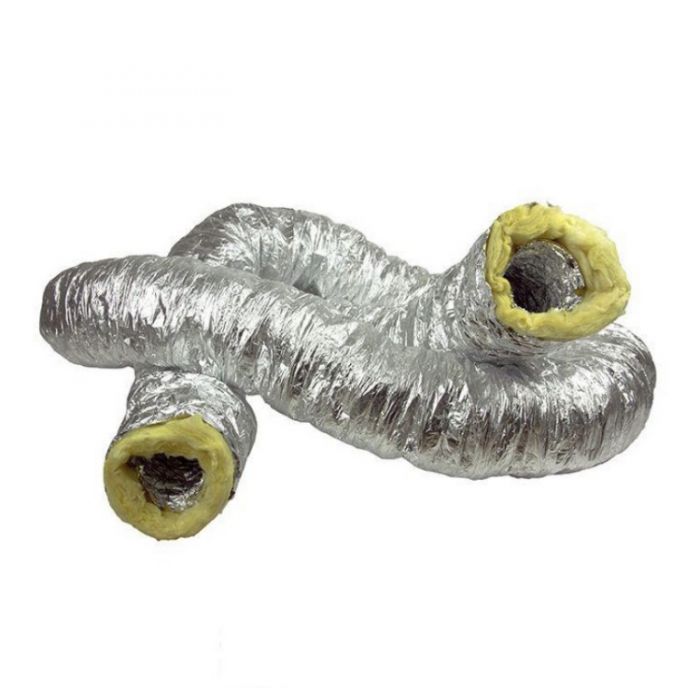
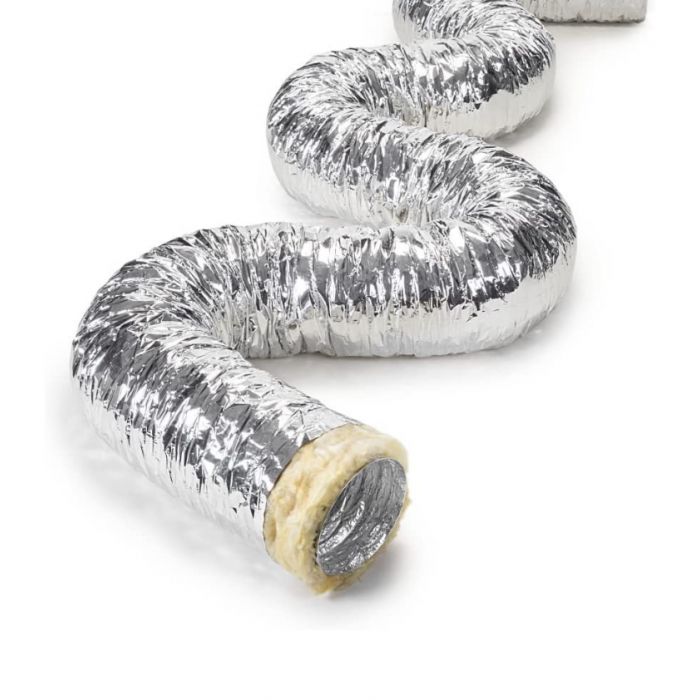
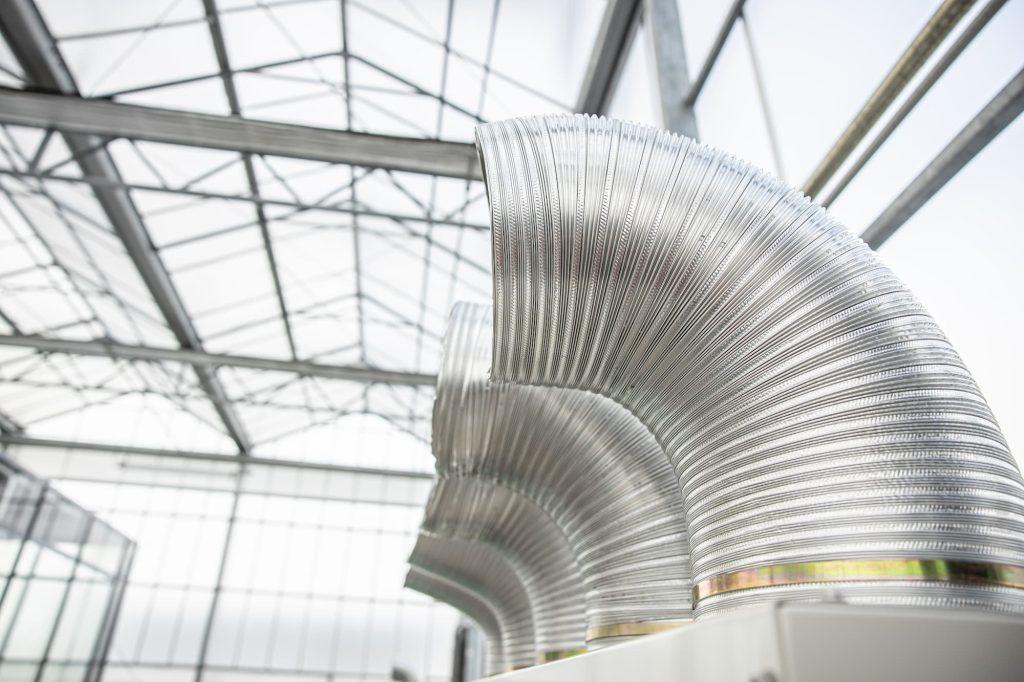
Flexible ducting is a type of ductwork manufactured from pliable materials that allow it to bend and conform to different installation requirements. Unlike rigid ducting, which is supplied in fixed lengths and shapes, flexible ducting can be routed around structural features, machinery and existing services with relative ease.
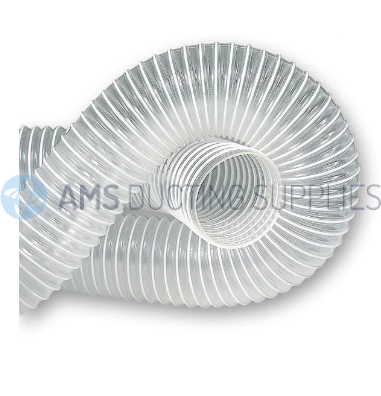
Most products feature a reinforced construction, often incorporating a wire helix that helps the duct maintain its shape while remaining flexible. This combination of strength and adaptability makes flexible ducting suitable for a wide range of ventilation and extraction applications.
What Is Flexible Ducting Used For?
Flexible ducting is commonly used wherever airflow needs to be directed between equipment, extraction systems or ventilation outlets. It can be found in commercial ventilation systems, industrial extraction setups, HVAC installations and manufacturing environments.
One of its most common uses is connecting machinery or extraction points to a main ducting network. The flexibility of the material allows for movement and vibration without placing unnecessary strain on the system. It is also frequently used in retrofit projects and confined spaces where rigid ducting would be difficult to install.
What Are the Advantages of Flexible Ducting?
The primary advantage of flexible ducting is its adaptability. It can be installed quickly and easily, reducing the need for multiple fittings and complex routing arrangements. This often helps lower installation times and costs while providing a practical solution for challenging environments.
It is also lightweight, making it easier to transport, handle and modify during installation. For many applications, flexible ducting provides an effective balance between performance and cost-efficiency.
Common Flexible Ducting Sizes
Flexible ducting is available in a range of diameters to suit different airflow requirements and system designs.
| Diameter | Typical Applications |
|---|---|
| 100mm (4″) | Domestic ventilation and small extraction systems |
| 125mm (5″) | Bathroom, kitchen and light commercial ventilation |
| 150mm (6″) | General ventilation and extraction |
| 200mm (8″) | Commercial airflow systems |
| 250mm–315mm | Industrial extraction and dust collection |
| 355mm+ | High-volume industrial ventilation systems |
Selecting the correct duct diameter is important for maintaining airflow efficiency. Ducting that is too small can restrict airflow and increase system pressure, while oversized ducting may reduce air velocity and affect overall performance.
Flexible Ducting Materials Explained
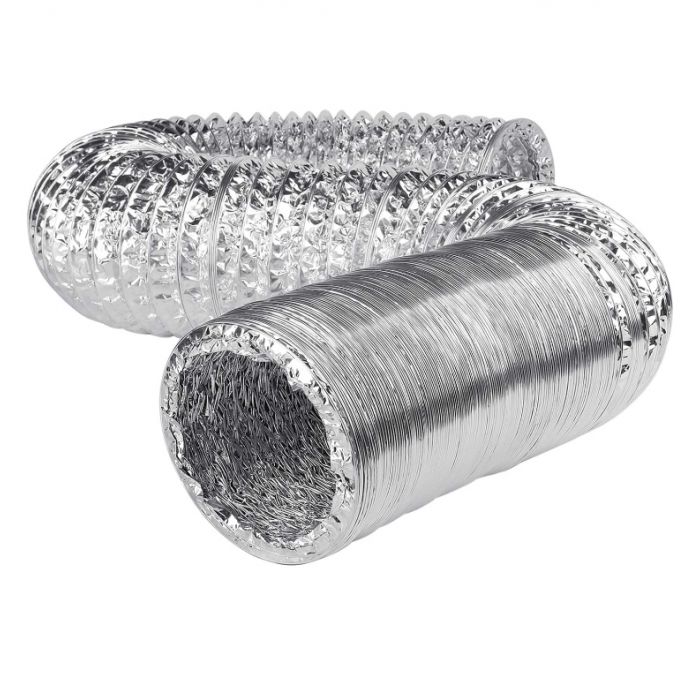
Aluminium Flexible Ducting
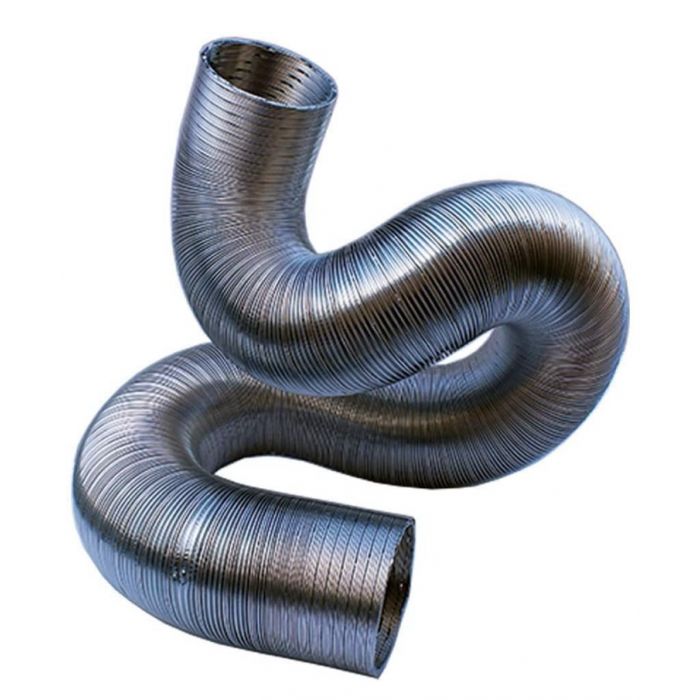
Aluminium flexible ducting is one of the most widely used options for ventilation applications. Its lightweight construction, corrosion resistance and ease of installation make it suitable for a variety of commercial and industrial environments. It is often used for general air movement, extraction and HVAC systems where flexibility and cost-effectiveness are priorities.
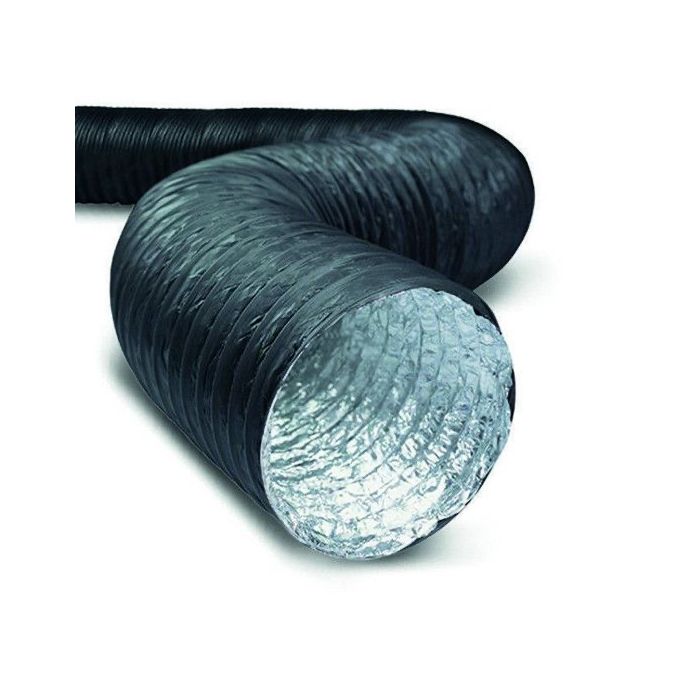
PVC Flexible Ducting
PVC flexible ducting is commonly used in environments where moisture resistance is important. It offers good durability and flexibility while also providing resistance to many chemicals and environmental conditions. This makes it suitable for workshops, agricultural facilities and certain extraction applications.
Polyurethane Flexible Ducting
Polyurethane, often referred to as PU ducting, is designed for more demanding industrial environments. It is particularly well suited to dust extraction systems and applications involving abrasive materials. Its excellent abrasion resistance helps extend service life in situations where other ducting materials may wear prematurely.
High-Temperature Flexible Ducting
For applications involving elevated temperatures, specialist fire-rated ductwork is available. These products are manufactured from heat-resistant materials capable of handling hot air, fumes and process exhausts while maintaining structural integrity and performance.
How to Choose the Right Flexible Ducting
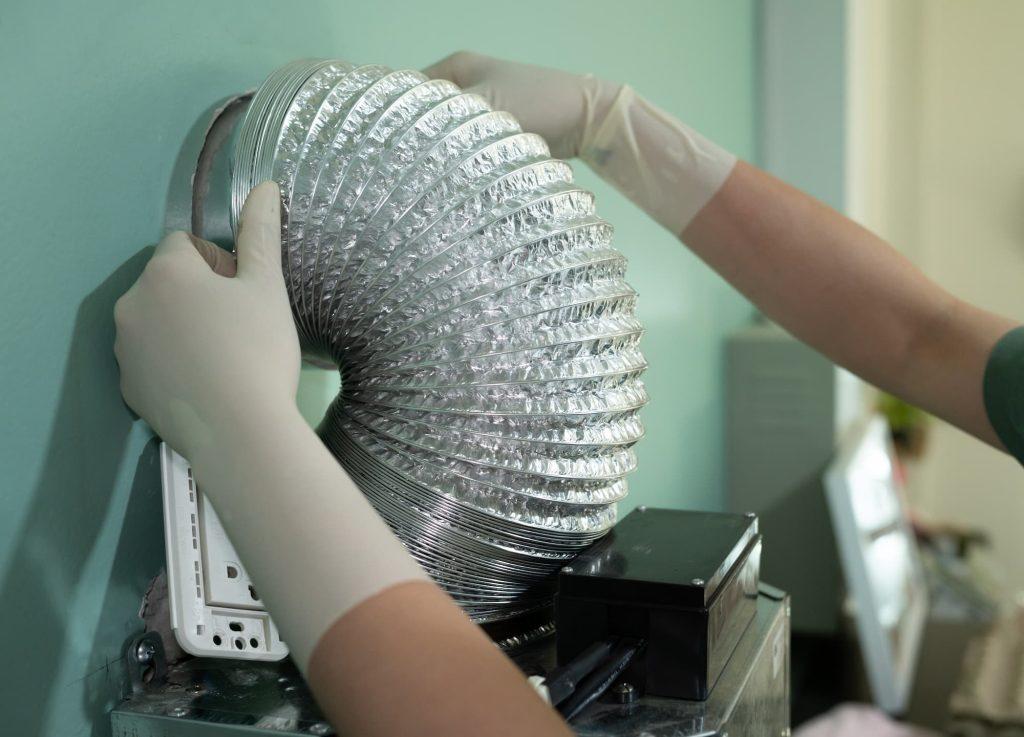
Selecting the correct flexible ducting depends on several factors, including airflow requirements, operating temperatures and the type of material being transported through the system. Applications involving dust extraction or abrasive particles may require a heavy-duty polyurethane solution, while standard ventilation systems may be adequately served by aluminium ducting.
The installation environment should also be considered. Factors such as moisture exposure, chemical resistance requirements and available installation space can all influence the most suitable choice. Taking these considerations into account helps ensure efficient airflow, improved durability and reduced maintenance requirements.
Flexible Ducting vs Rigid Ducting
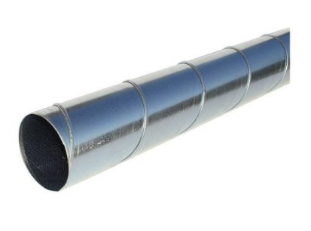
While flexible ducting offers exceptional versatility, it is generally less efficient than rigid ducting over long distances. The corrugated internal surface found in many flexible products creates more airflow resistance than the smooth interior of rigid ductwork.
For this reason, flexible ducting is often used for connections, branch lines and areas where adaptability is required, while rigid ducting is typically used for primary duct runs. In many ventilation and extraction systems, a combination of both provides the most effective solution.
Flexible Ducting Solutions from AMS Ducting Supplies
At AMS Ducting Supplies, we supply a wide range of flexible ducting products for ventilation, extraction and industrial airflow applications. From lightweight aluminium ducting to heavy-duty polyurethane solutions, our range is designed to meet the demands of commercial and industrial environments.
Whether you are specifying a new system or upgrading an existing installation, our team can help you identify the most suitable flexible ducting solution for your application, ensuring reliable performance and long-term value.

